
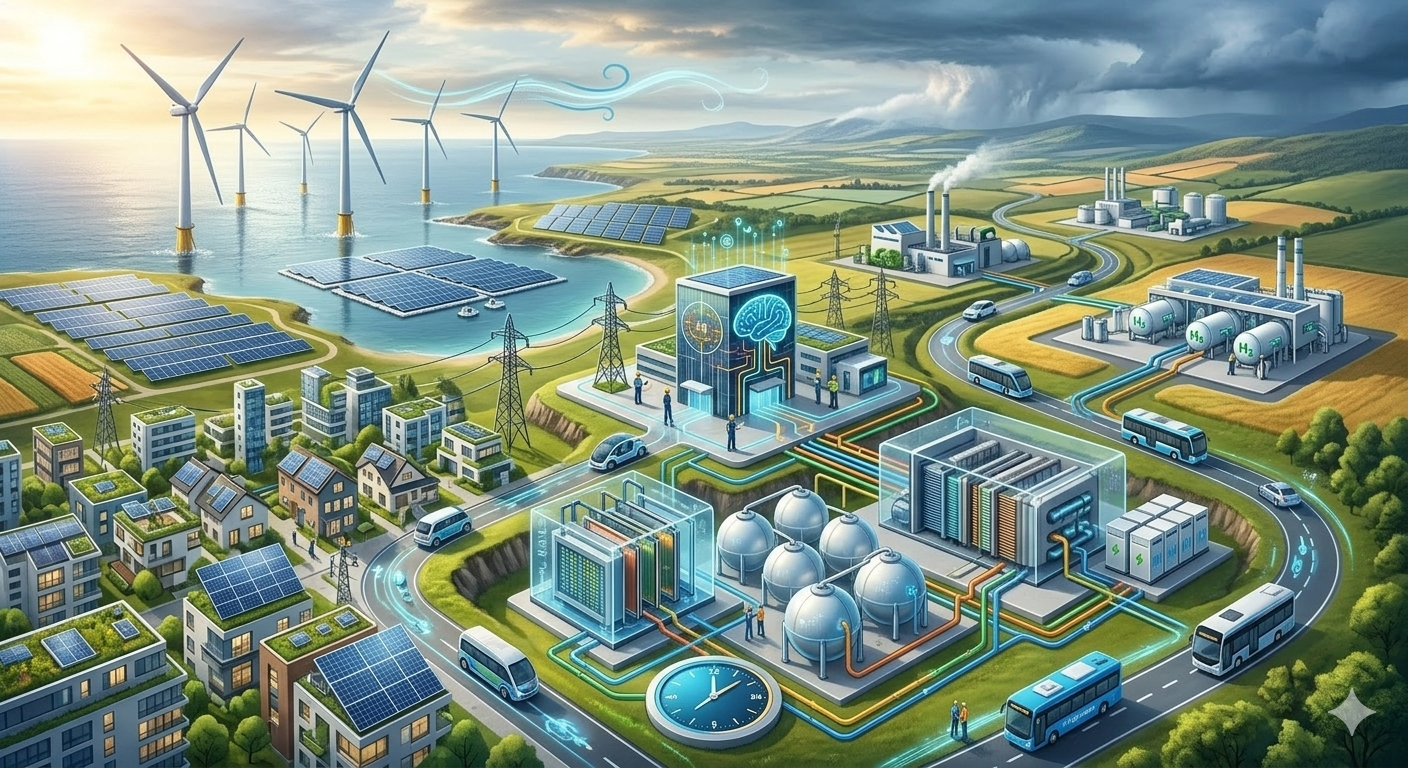
As the global energy system undergoes a once-in-a-century transformation, two technologies are converging to enable a truly carbon-free electricity economy: decentralized smart grids and green hydrogen. This convergence is more than a technical milestone—it’s a redefinition of how energy is produced, distributed, and stored. Traditional grids, built for centralized power generation, struggle to accommodate the variable nature of solar and wind energy. Enter decentralized smart grids—digitally connected, distributed energy networks capable of autonomously balancing supply and demand in real-time. Pair these with green hydrogen, a scalable energy vector produced through electrolysis powered by renewable energy, and we begin to unlock a new paradigm: 24/7 clean energy availability. Why Smart Grids Matter Decentralized smart grids are more than just an upgrade—they represent an architectural shift. Using edge computing, IoT sensors, and AI-based grid orchestration, these systems can forecast load, react to fluctuations, and prioritize distributed energy resources (DERs) like rooftop solar, battery storage, and electric vehicles. According to recent industry benchmarks, latency in grid response has dropped from over 60 seconds in legacy systems to sub-5 second response times in next-gen architectures. This enables not only better demand response but also real-time market participation for small-scale producers. The Role of Green Hydrogen Green hydrogen offers long-duration storage and decarbonizes sectors that electricity alone cannot—heavy industry, aviation, and shipping. Electrolyzers—especially those using PEM (Proton Exchange Membrane) technology—are rapidly improving. Current data suggests that electrolyzer efficiency is approaching 80% (HHV), with CAPEX dropping below $500/kW in some regions. What’s transformative is the ability of hydrogen to act as a temporal arbitrage mechanism: excess renewable energy generated during non-peak hours can be stored as hydrogen and reconverted via fuel cells or turbines when needed. This stabilizes grid frequency, reduces curtailment, and monetizes excess generation. Smart Grids + Green Hydrogen: A Symbiotic Future When combined, decentralized smart grids and green hydrogen create a two-tier energy infrastructure: Tier 1: Digitally managed, distributed electricity production from renewables, optimized with real-time grid intelligence. Tier 2: A green hydrogen backbone that buffers seasonal variability and serves high-demand sectors with zero-emission fuel. This model ensures both short-term flexibility and long-term reliability—essential for achieving 24/7 carbon-free electricity, a target now adopted by tech giants like Google and Microsoft. Key Market Implications Infrastructure Investment: CapEx in smart grid technologies is expected to grow at a CAGR of 15% through 2030, driven by DER integration and resilience mandates. Hydrogen Hubs: Strategic hydrogen production zones near renewable-rich areas will emerge as economic anchors, similar to today’s oil refineries. Policy Realignment: Grid codes and market designs must evolve to reward flexibility, not just capacity. Job Transformation: New roles in digital grid management, hydrogen logistics, and green electrochemistry will redefine the energy workforce. Utility Business Models: Linear distribution revenue models will give way to platform-based, services-led approaches. The Road Ahead The convergence of decentralized smart grids and green hydrogen is not just a technological evolution—it’s an economic imperative. As renewable penetration deepens and volatility increases, these systems provide the flexibility and scale needed to maintain grid stability while accelerating decarbonization. The question is no longer whether the future is electric—but how we ensure that future is both clean and continuous. How can your organization position itself at the intersection of digital energy and green molecules? #SmartGrids #GreenHydrogen #EnergyTransition #CleanTech #Decentralization #RenewableEnergy #GridInnovation